2mw2lt review, round 1/5: do not ship
blocking src/cards/restore.ts:41: A saved card is restored on a new device before the session is verified again.
The desk at work
Every screenshot on this page is the real console, run against an example repository: four sessions on three machines, across Claude Code, Codex and OpenCode, and one person deciding.
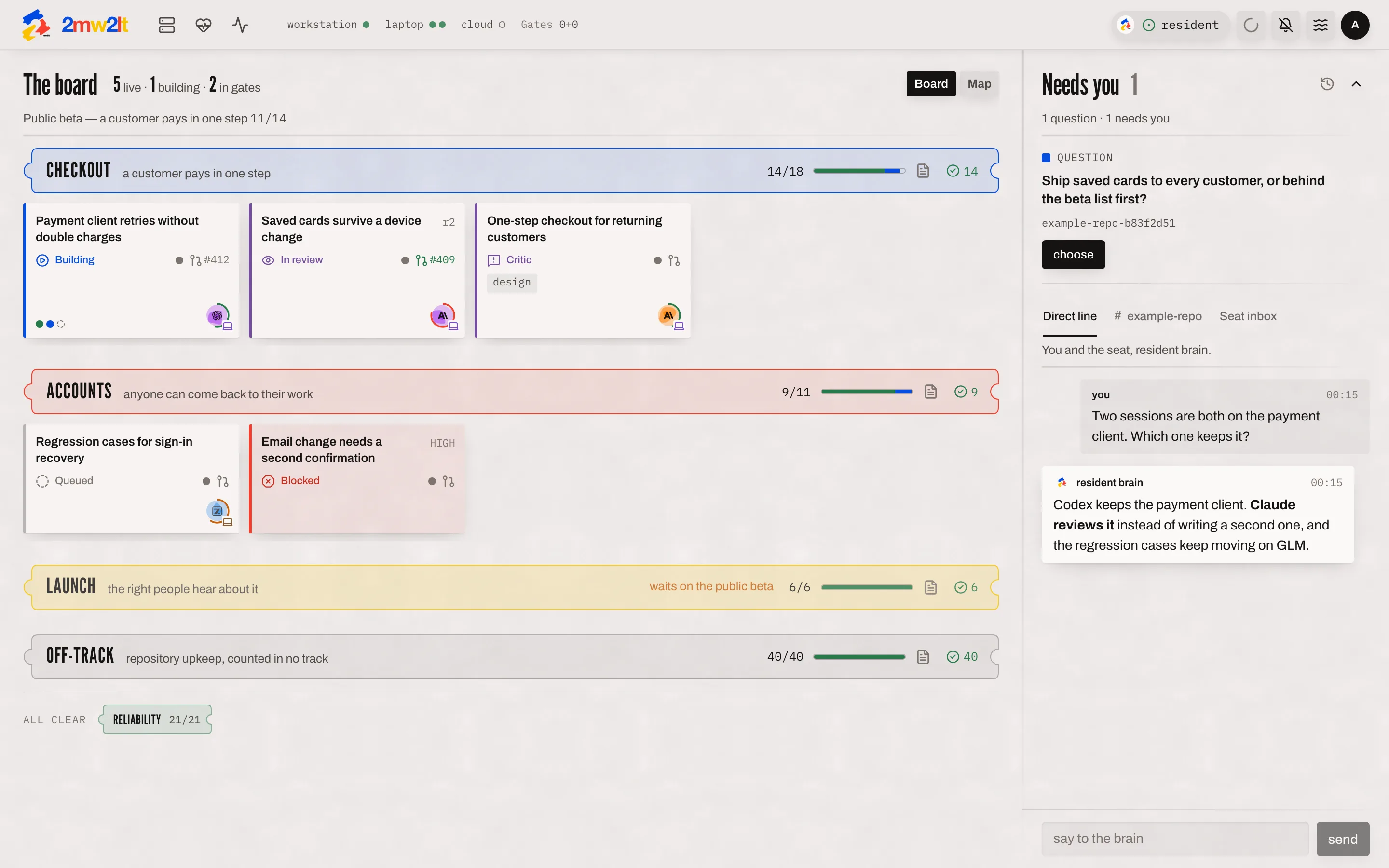
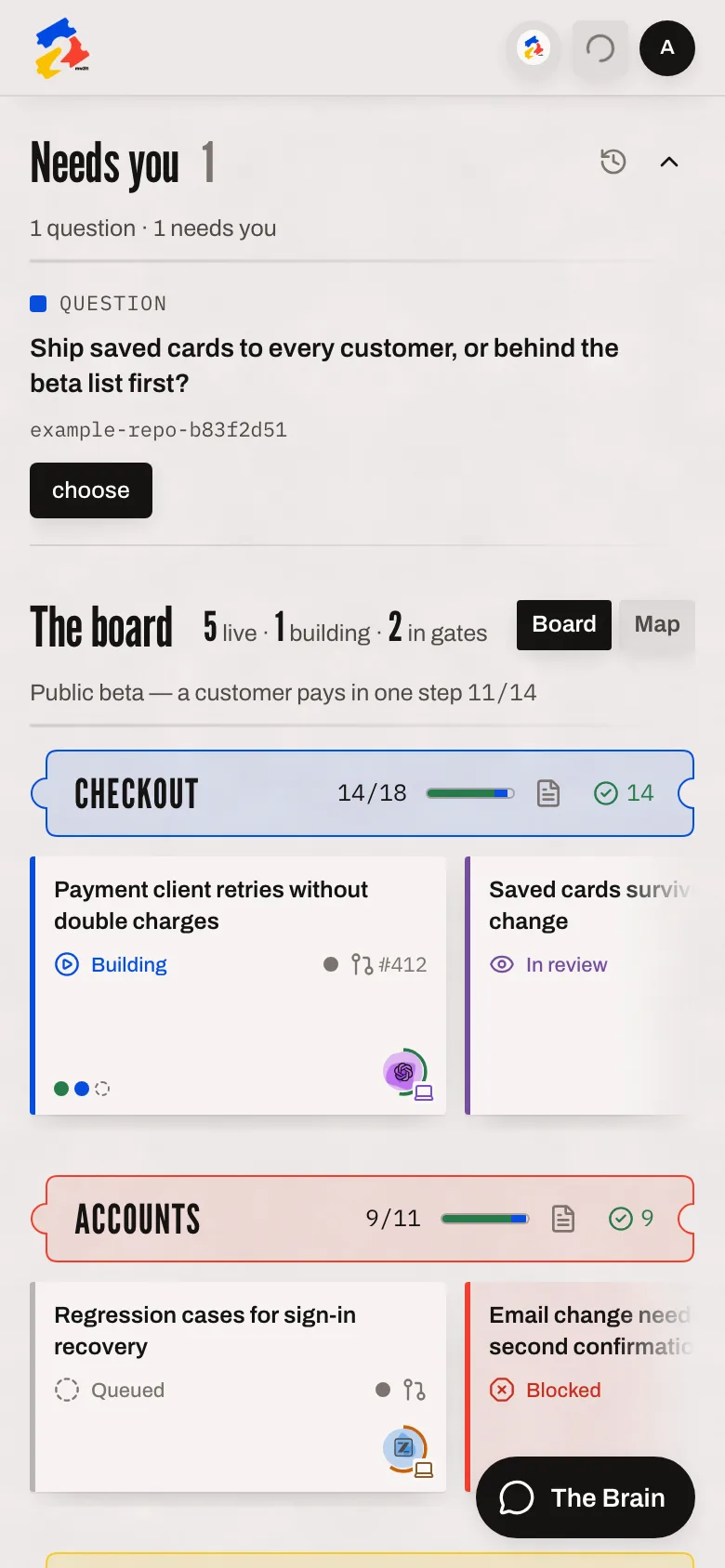
Each lane says what it is for and how far it has come. It is not a queue of tickets.
A card shows where the unit stands, its pull request, the session holding it and how far through the gates it is.
Needs you holds only the decisions that belong to you. The brain is a message away.
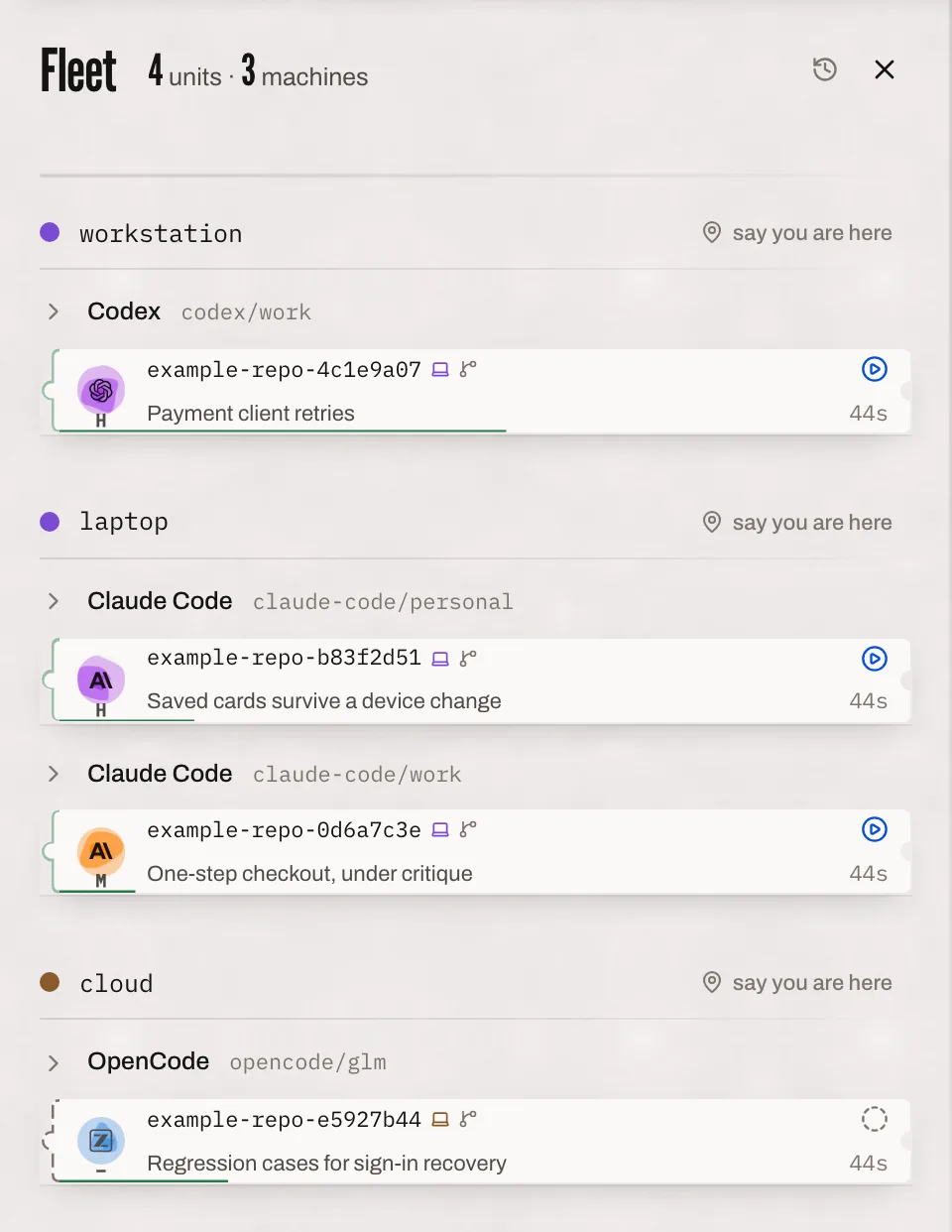
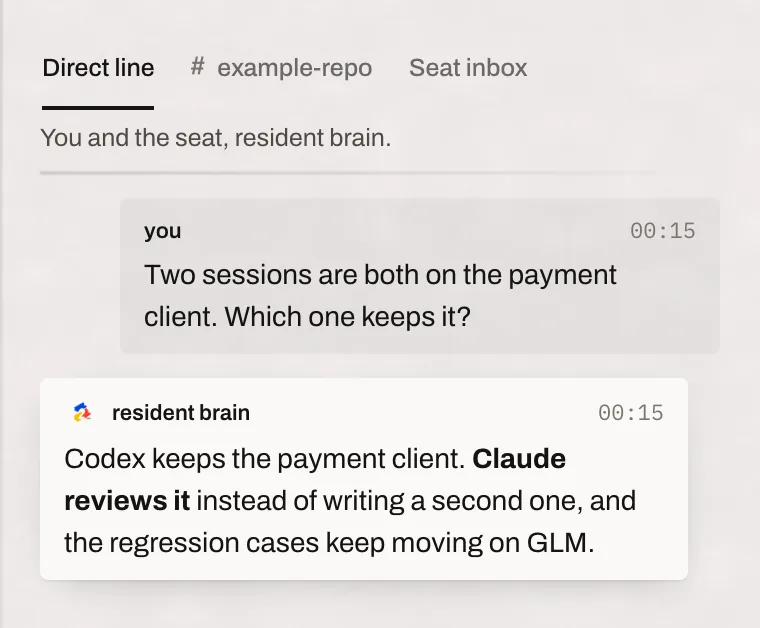
Each session joins with one command and stays reachable. Fleet shows which session is on which machine and account, and what each one is doing. When two reach for the same code, the brain gives each a distinct job.
Before work is accepted, steering commissions a review from another vendor’s model. It reads a sandboxed clone, against your project’s own reviewer brief. The verdict goes on the pull request as a comment and as a status check your branch rules can require.
blocking src/cards/restore.ts:41: A saved card is restored on a new device before the session is verified again.
Ran the card restore tests and read the restore path against the session check. The fix holds on a fresh device and on a returning one.
minor src/cards/restore.ts:58: The retry limit is a bare number. Name it beside the timeout so the two change together.
An example in the format the gate posts. The pull request it judged is the saved-cards card on the board above.
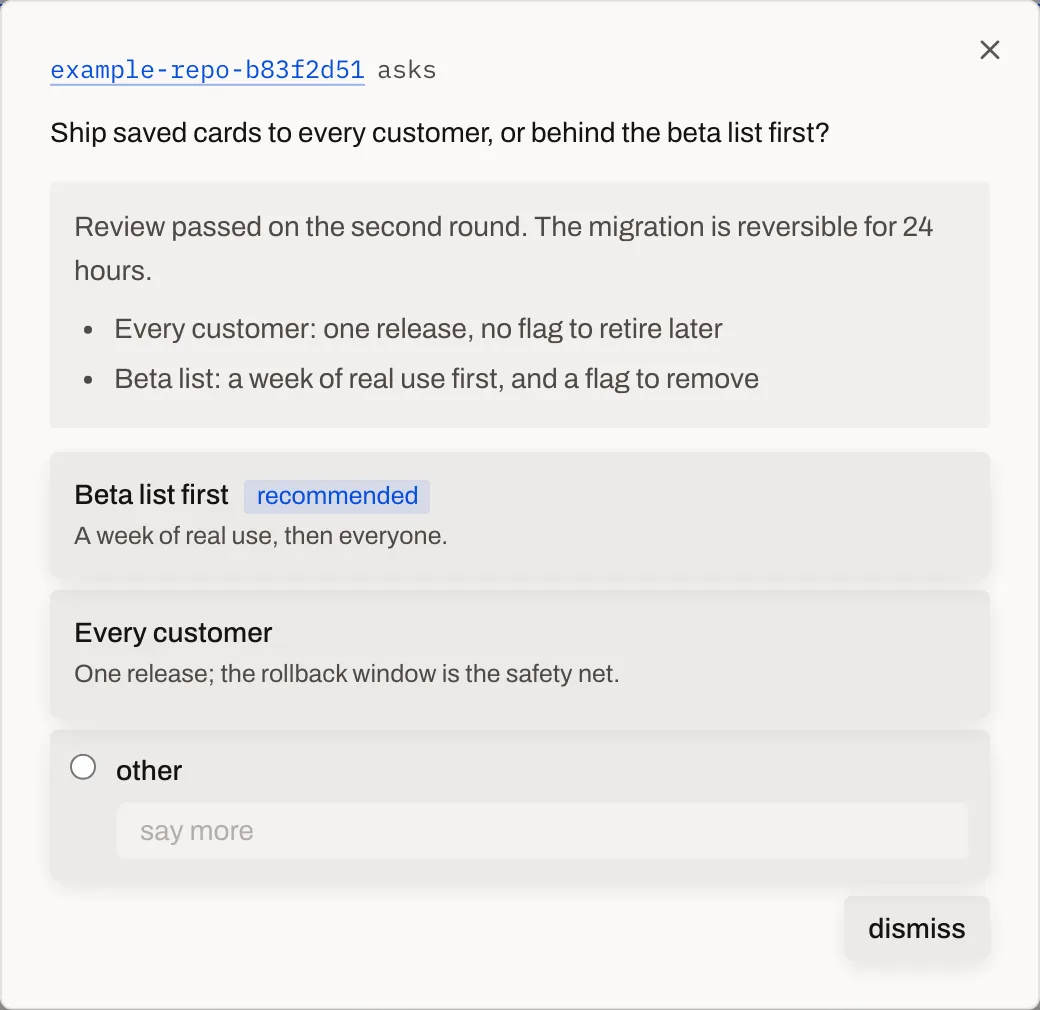
A session does not interrupt you with what it can settle. A decision that is yours arrives with its context, the options and a recommendation, and one press answers it. On your phone, Needs you comes first.
Before a session compacts, hands over or leaves, it writes a checkpoint on the pull request. The next session starts from it, on whichever tool or machine picks the work up.